fhd@battlesync.site
Introduction to Defender Video Game
What is Defender?
Defender is among such names that automatically evoke memories in gamers who have grown up in the golden age of arcades. Published in 1981 by Williams Electronics, it was a side-scrolling shooter, which stretched technology and player ability to the extreme. Defender, unlike many other early arcade games that were centered on simplicity, was a complex mixture of high-speed action, multi-direction shooting and a radar system requiring players to multitask like in no previous game. It was not a game of shooting aliens, but saving humanity, which was made up of small astronauts spread all over the surface of the planet. Had you failed, these astronauts would be either captured, or turned into murderous beings, or stranded to their doom. That brought an element of hurry which made the players shoot quarters into the machine.
The other thing that made Defender unique was its challenge. Games such as pac-man and space invaders were difficult enough, but defender was an animal. It required fast reactions, acuity and the capacity to follow up a mess on several areas of the screen simultaneously. The controls were not generous, and it was very overwhelming to many casual players and it could not have given any feeling of achievement to those who mastered it. Defender soon became a standard among the hardcore gamer and a lot of action-packed shooters came after it.
What Makes Defender special Amongst the Classics.
At the start of the 80s, arcades had an abundance of new titles, although the vast majority were based on rather simple schemes. Defender escaped with providing complexity, speed, and depth that not many others could have matched. It included a radar at the top of the screen, which provided the player with the birds eye view of the whole battlefield and this was a first of its kind. The multi-button control system, thrust, reverse, fire, smart bomb, hyperspace is initially daunting, but it provided the player a degree of control never before seen in other arcade hits.
The feeling of responsibility was another best part. You were not fighting to save your own life like in most games; you were charged with saving human lives in Defender. That provided the gameplay with a more emotional layer where each loss of an astronaut could be seen as a personal loss. This mechanic was innovative and differentiated itself among the shoot everything attitude of the time.
The fact that defender was one of the most difficult arcade games in history and its image only contributed to the popularity. It was not a game that you easily grabbed and knew in half a game but a challenge to stamina, ability and concentration. Due to that, it gained a large fanbase among serious gamers, many of whom to this day consider it to be one of the greatest and most difficult arcade games of all.
The History of Defender
The Birth of Defender in 1981
The history of the world of gaming changed in the year 1981. Titles such as Donkey Kong and Galaga were sweeping across the world, yet Williams Electronics needed something new- something that would be distinctive in a market full of competition. Enter Defender. The game, written by Eugene Jarvis and Larry DeMar, was not another shooter: it was a tremendous experiment to test the boundaries of arcade hardware.
Development wasn’t easy. Initially, the group found it hard to get the correct path. Much of the early work was like the Asteroids, containing fixed screens and basic shooting. But Jarvis wanted to take it a step further and he imagined a huge terrain, which the enemies were able to assault at any point. Such vision later worked out to be the side-scrolling, radar-laden game we have recognized as Defender.
Defender could not overnight conquer the world when it finally made it to arcades. Actually, it had a very high learning curve that deterred amateur gamers. However, after the news of its complexity and difficulty became known, hardcore gamers started coming in droves to it and it soon became one of the most lucrative arcade cabinets of its era. Defender sold tens of thousands of units all over the world by the time it ended its run, and became a classic indeed.
Key Developers and Creators Behind the Game
The secret of the success of Defender was a small yet spirited crew. The lead designer was Eugene Jarvis, sometimes known as the godfather of arcade shooters. He worked on pinball design before working on Defender, which exposed him to a unique view of fast paced reflex oriented game play. Larry DeMar worked with him and did a great deal of the programming and system design. They developed together both a visually and mechanically innovative game, and a technically impressive game.
Defender was not the end of the creativity of the duo. Both Jarvis and DeMar would continue to produce other arcade hits such as Robotron: 2084 and Smash TV both of which would bring the same intensity and mayhem as Defender ushered in. The history of arcades could have probably been quite different without the vision and will of this team.
The Gaming Industry Landscape During Defender’s Release
A proper appreciation of Defender needs one to be close to the gaming industry of 1981. In the arcades it was a boom, children and adults alike were consuming thousands of hours (and coins) on machines such as pac-man, centipede and space invaders. These were enjoyable games, but were also not very difficult. Defender came like a breath of fresh air and it was complex and rich with detail in a way few players had encountered before.
Defender was able to make a fast-paced and visually stimulating world which appeared ahead of its era, at a time when graphics were bare and processing power was limited. Its horizontal scrolling was revolutionary, and the way to the numerous side-scrolling shooters that followed. The game was a radical departure in its multi-threat requirements: players had to save people, fight aliens, and monitor the radar at the same time, something the one-dimensional nature of most arcade games could not provide.
It is this desire to be innovative that enabled Defender to withstand time. Although a lot of the games created in the early eighties are remembered with fondness but play outdated with modern times, Defender remains intense, challenging, and rewarding to play, decades later.
Gameplay Mechanics
Core Objective of the Game
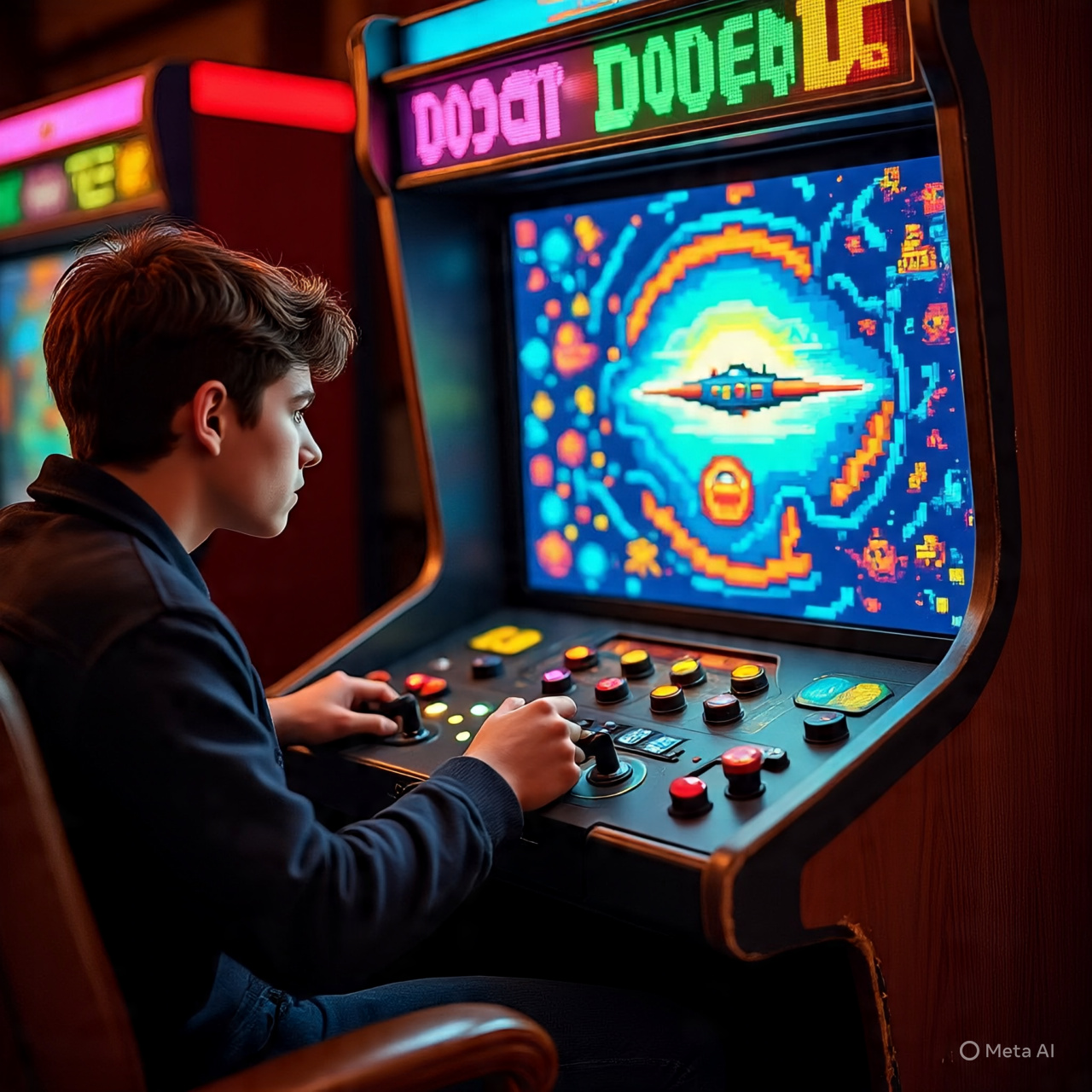
Core to its existence, Defender is survival and protection. Players are in charge of a spaceship that is supposed to protect the surface of a planet against the onslaught of alien attackers. The mission was not solely the killing of enemies, as most of the shooters of the time did, but the saving of human astronauts, who were spread across the ground. In case they managed to kidnap these humans, the aliens would become lethal so-called mutants, and the game would be even more difficult.
This mechanic made the game more than a mere point-racking exercise. Players were required to make decisions all the time: Dash down to an alien with a human on its back or concentrate more on the swarm on the opposite side of the radar? Such a balancing act has provided the impression of incessant tension, making no two playthroughs ever feel exactly the same.
The game also had no real “end.” Similar to most arcade titles of its time, Defender was continuous, and with every new wave of enemies, the speed, strength, and number of the enemy multiplied. It meant that the sole real purpose was to outlive as long as you could–as high as you could be on the score board.
Enemies, Aliens, and Challenges
The wide range of enemies with special behavior is one of the most characteristic elements of the game Defender, as it allowed to have the battlefield in the air. The first danger was posed by the so-called Landers, alien vessels flying around the surface of the planet and monitoring any signs of human astronauts so that they could be taken. Should they ever be able to get one on top of the screen, the human was turned into a horror of a “Mutant.” Mutants resembled regular enemies except that they were faster, more aggressive, and were able to overwhelm even players who were experienced.
In addition to the Landers, there were the so-called Bombers, who had left poisonous mines, which blocked the movement and flooded the screen. Then there were the “Pods” that would burst into swarms of smaller enemies known as Swarmers when killed, at which point a great explosion of chaos would occur. Another nearly legendary obstacle was the baiters, which were small, fast sailing vessels and would appear in case the players took too long to cover a level and basically, they would punish them by relentlessly attacking them.
This combination of the types of enemies was created to make the players continuously pressured. Every enemy needed a variant approach and not changing down to the ground typically meant a rapid finish of the game. The genius of the construction of Defender was that it stacked these threats in such a way as to provide a field in which any side could present a danger simultaneously. It was not only a matter of shooting–but of multitasking, making snap decisions, and remaining cool in utter turmoil.
Weapons and Power-ups
This may appear rather limited by modern standards, but in 1981, it provided players with a surprisingly large degree of tactical options. The main tool was the laser on the ship that fired very fast and could cut up enemies. Nevertheless, lasers could not do the trick when swarms were too large.
At that point, there was Smart Bombs. These killing machines cleared the screen of any enemies who were in sight and were like a life line where there were too many foes. There were however a few bombs available to players and they needed to use them wisely.
The other major mechanic was the Hyperspace button which immediately moved the ship of the player to a new point on the screen. This may save you in a corner, but it came at a price: you always risked teleporting right into a foe or a bullet and your run would be over. Hyperspace was the gamble of last resort and using it was quite common and a desperate measure.
Defender did not use conventional power-ups as temporary shields or improved weapons as later arcade shooters. Rather, it depended on the player, and the decision-making. This bare bone style saved the functionality to reflexes and strategy, and so each victory was achieved through hard work, not through the bonuses of luck.
Scoring System, Levels and Difficulty.
Defender was notoriously hard, and much of that was as a result of the structure of its levels. They played the game in waves which increased the aggression and speed of the enemies. As opposed to linear level-based games, there was not really an advancement other than increased difficulty and increased chaos. It was not a matter of getting to the finish-line but of what was the maximum time you can take before you were defeated.
The aspect of scoring was very significant to ensure that players remained hooked. Each enemy killed was counted and saved human astronauts gave large bonuses. This scoring system gave players incentive to risk and in many cases this pushed them into dangerous positions simply because they could get a big payoff in the form of high-score. It wasn’t merely exciting to save a human being at the nick of the time, and then blow to pieces the alien that was taking them away–it was, in fact, rewarding in points as well.
The defeation curve was ferocious. Defender did not give players some easy waves to begin with-it threw them into action right on the start with a fast-paced game that required full concentration. This is why a lot of amateurs went home disappointed in the first few attempts. To those that took up the challenge, however, every wave that was cleared was a like badge of honor, a little triumph in a game that was apparently tailored to wear you down.
The Defender Experience
Graphics and Visual Style
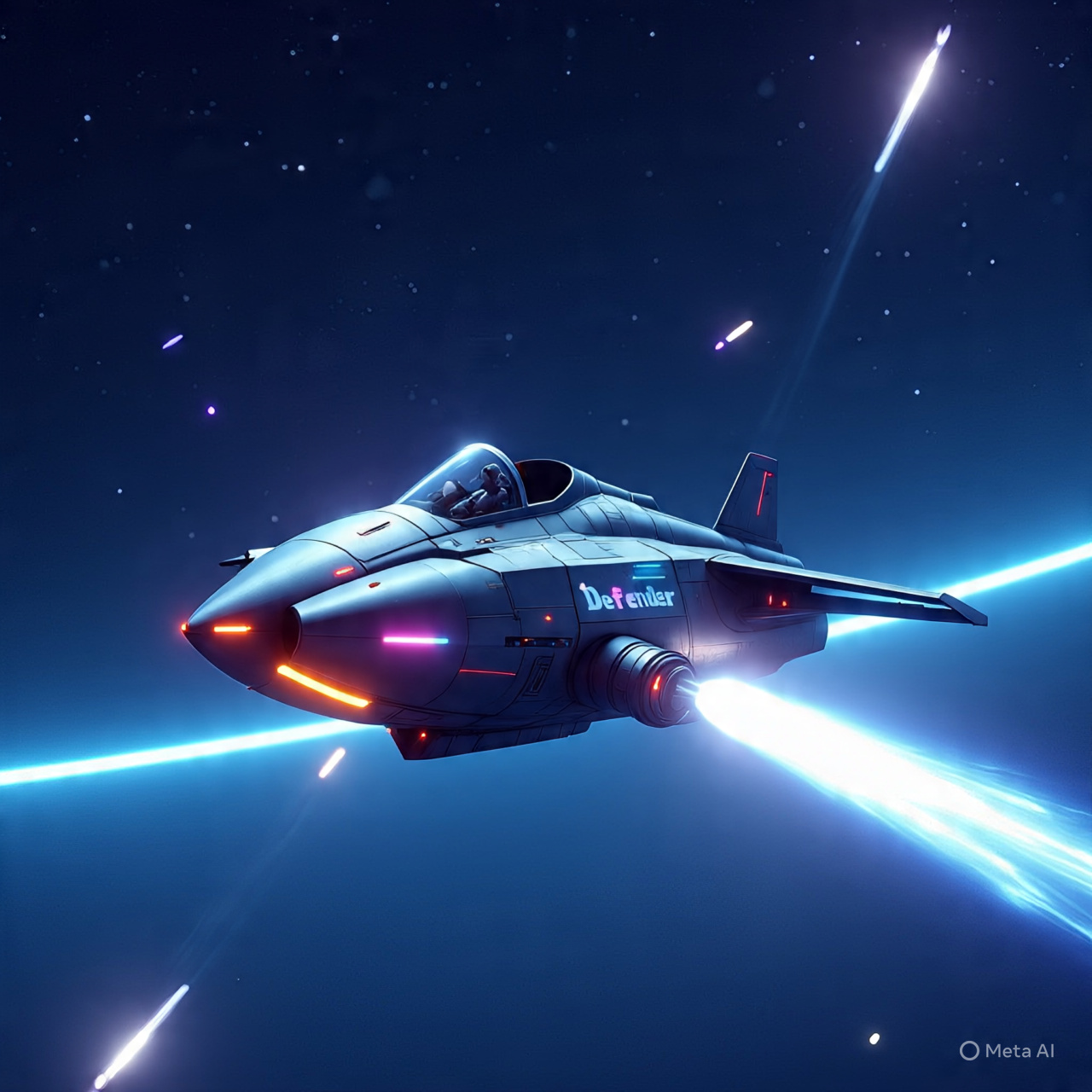
The visuals may be seen as basic as per the modern standards, but in 1981, they were revolutionary. Colors in the game were bright in the sense that they stood out on a black background to allow tracking of the enemies and objects in the game even in the chaos. The side-scrolling terrain provided scale and motion that were seldom felt in arcade plays at the time, producing the illusion of flying around an entire planet instead of just being stuck in a fixed arena.
The radar that was at the top of the screen was what was really remarkable. It was a mini-map of the whole level that was presented on a small strip, which included the location of the enemies, human astronauts and the incoming threats. It added a sense of tactic, whereby players were always looking at the radar to see when there is imminent danger. The game was even more demanding because you were required to divide your eyes on the main screen and the radar.
The smooth style of the ship itself, the types of enemies, and the spectacular bursts all played a part in an experience that was futuristic and extreme. Defender was not an ordinary arcade shooter however, but a glimpse of the future, a high-tech battlefield that was packed inside a cabinet screen.
Sound and Music Elements
Another aspect that purported the identity of the game was the sound design of Defender. Rather than a background music, it used a lot of sound effects to bring ambience. Each move was identified by a particular sound–the crack of a laser, the hiss of an intelligent bomb, the shaky voice of a non-human victim.
This kind of minimalism suited this game that was all about tension very well. Lacking music meant that there was a hyper-awareness of all noises on the part of players, and sound effects were used as pre-warnings of imminent danger. As an illustration, the specific beeping of a Lander seizing a human being was sufficient to cause players to immediately panic and rush to rescue.
Defender stood out in arcades where dozens of machines were competing on the attention. You could hear the commotion even when you were not playing, and the futuristic sound effects of the game attracted even attention.
Controls and Player Interaction
Of there is one thing Defender is known by–other than difficulty–it is the controls. In contrast with other arcade games with either a joystick and one or two buttons, Defender had a joystick together with five distinct buttons: thrust, reverse, fire, smart bomb, and hyperspace. It was overwhelming to the novices.
However, once perfected, this installation was capable of the most spectacular precision and control. Players have been able to move about, forward, backward, up and down in a fluid movement, as well as handling the attacks and emergency maneuvers. It sounded like training on a musical instrument–the controls had to be practiced, memorized with muscle and timing.
Many casual gamers were scared off by this complexity, and this complexity also earned Defender its hardcore game status. Learning the controls was in itself an accomplishment, and those who succeeded in doing so tended to become addicted forever. The system made you be quick, responsive and tactical simultaneously, and each session was a rush of adrenaline.
Legacy and Influence of Defender
The Arcade Scene as Made by Defender.
Defender was not an ordinary arcade game but game changer. The fact that it was successful showed that gamers were ready to consume something more, more skill-based and not a simple pick-up-and-play game. It prompted a succession of side-scrolling shooters that ruled the arcade and home console markets during the 80s.
Defender became the predecessor to thousands of games developed since that time due to its introduction of such mechanics as radar tracking, multi-button controls and the idea of rescuing human beings. Other shooters such as Gradius, R-type and even newer bullet-hell shooters owe some of their achievements to the innovations that Defender introduced into the table.
Defender also defined the new level of difficulty in arcades. It demonstrated that games did not need to be simple to win- sometimes, being incredibly difficult was the reason why players came back. The one-more-try mentality would be a standard of arcade culture and Defender was among the first to follow that ethos.
Influence on Future Video Games
Through the decades of gaming history, the fingerprints of Defender can be spotted. Its side-scrolling format had a direct influence on such titles as Gradius, R-type and Darius which further developed the formula and added new weapons, enemy formations and expansive levels. Games beyond the shoot-’em-up category were also inspired by it: even the Defender-style rescue mission in Halo had its motivation in the need to save human lives.
The radar was a game-changing technology but now it is an ingredient in myriads of action and strategy games. Open-world titles often have a mini-map on the top of the screen a concept that Defender perfected more than 40 years ago.
Probably, most significantly enough, Defender set the precedent that games could be both brutally challenging and a big hit. It established a prototype of the hardcore gamer subculture, in which beating a tough system and surviving the harshness of difficulty was regarded as a status symbol. The legacy of this spirit is present in the games such as Dark Souls and Cuphead, which are both predicated on the idea of difficulty being an element of their appeal.
Defender’s Place in Pop Culture
Although most of the arcade classics went into oblivion, Defender has continued to be a household name in the gaming culture. It has been featured in films, television series and in antique collections, commonly as a representation of early-hardcore gaming. As an illustration, when speaking about the hardest video games that have ever existed, Defender is nearly always mentioned.
The game also emerged as a cultural reference point to a generation of arcade-players. To most, no reference to Defender can be made without mentioning memories of standing shoulder-to-shoulder with friends, quarters lined up on the cabinet and the rush of adrenaline of surviving another wave.
It is still played in retro gaming circles today, in the form of tournaments, high-score competitions and emulation. It is not only its legacy in what games it has spawned- it is the culture of challenge, ability, and community it has created in arcades across the world.

Ports, Remakes, and Sequels
Home Console Adaptations
With the arcade boom still going on the inevitable happened and Defender was soon on its way to home consoles and computers. Atari published the versions of Atari 2600, Atari 5200 and even Atari 8-bit computers. Although such versions were visually barebones in comparison with the arcade original, they nonetheless recreated the very essence of the game and provided the players with the opportunity to play Defender at home.
Ports were also made over the years to other systems, like the Commodore 64, ZX Spectrum and NES. All of the adaptations had their niche–some had fewer controls or graphics, some were unable to recreate the radar system, and so on–but they all helped to extend the popularity of Defender outside the arcade.
Towards the end of the 80s, Defender was more than a phenomenon in arcades, it was a household name. It became one of the few games that was able to effectively cross that bridge between arcade cabinets and the living room consoles and cement its role in gaming history.
Defender II and Stargate
With the success of it there was no way that a sequel could be left out. Published in 1981, a few months after the first one, Stargate (commonly home releases called Defender II) built on the basic formula. It also added new foes, including the “Yllabian Space Guppies” and the “Dynamos,” and it also provided the players with a teleportation ability called the Stargate that could make them warp instantly to humans that were in danger.
The follow-up was more difficult and perhaps more challenging than the first. Although it failed to reach the same legendary status, it did quite well commercially and proved that the formula of Defender could be expanded upon, as opposed to mere duplication.
Over time the brand name “Defender II” became firmly embedded in many areas and became established as a Defender series even though its original name was Stargate. The hardcore fans tend to argue about which game is better but all the same each of them were arcade classics.
Modern Remakes and Re-releases
As most of the popular classics, Defender has experienced its quota of re-versions and re-editions. Playstation 2, Xbox, and GameCube have a 3D remake of Midway in the early 2000s, which tried to modernize the formula with new graphics and new gameplay. Although it did not recreate exactly the same magic the original had, it brought the original Defender to another generation of players.
In the meantime, the original arcade version has been released on a digital format and retro collections. Games such as Xbox Live Arcade, PSN, and other plug and play consoles have ensured the survival of Defender as old fans as well as new players are able to enjoy the game without necessarily tracking down an arcade cabinet.
Defender is not only a game today, but a game in the history of gaming. It is guaranteed to have its legacy extending decades to come due to its existing presence in retro game collections.
Competitive Play and High Scores
Arcade Competitions and World Records
Arcade gaming is not only fun, but also a contest in 1980s. Badges of honor were high scores and the difficulty of Defender made it one of the ultimate tests of skill. Local tournaments were frequently fought in arcades, and the participants competed to win the respect and a position on the leaderboard.
Countless world record attempts have been witnessed over the years by Defender. There are those players who have been able to make games last more than 30 hours, extending beyond millions of points through simple stamina and prowess. Such organizations as Twin Galaxies, the videogame record-keeping organization, continue to list Defender in its official competition titles list.
All these records were even more astonishing by the demanding nature of the mechanics of the game. Defender gave high scores based on the ability to learn its systems and remain focused during the game unlike in modern games where results depend on the dice or glitches.
Strategies for Scoring High
The trick to the high score in Defender is not on the blind firing but rather on the strategy. Experienced individuals tend to save humans at the earliest stage, as losing too many of them cause a wave of Mutants, which are very hard to manage. It is also important to master the use of Smart Bombs, wasting them at the beginning of the wave can end the whole world later.
The other important strategy is effective utilization of the radar. Players who keep on screening the positions of their enemies enjoy a massive edge since they are able to block Landers before they steal more humans.
Lastly, caution is usually a better attribute than aggression. Returning players understand when to turn back, recede, and wait to be afforded the favorable moment to attack. It is this defensive and offensive equilibrium that makes the difference between ordinary players and those that become masters of Defender.
Famous Players in Defender History
Similar to a lot of traditional arcade games, Defender gave birth to its own legends. Others attracted a name in local arcades, others were renowned the world over through their amazing stamina and ability. Competitive arcade gaming history is still marked with names such as Steve Juraszek who made a record of more than 16 million points in 1982.
These were not merely gamers, but the real pioneers of esports when the term was not yet known. Their commitment and ability to master Defender contributed to the demonstration that played video games can be more than entertainment: they can be serious games.
The Reason Defender Is Relevant to this Day.
Nostalgia Factor
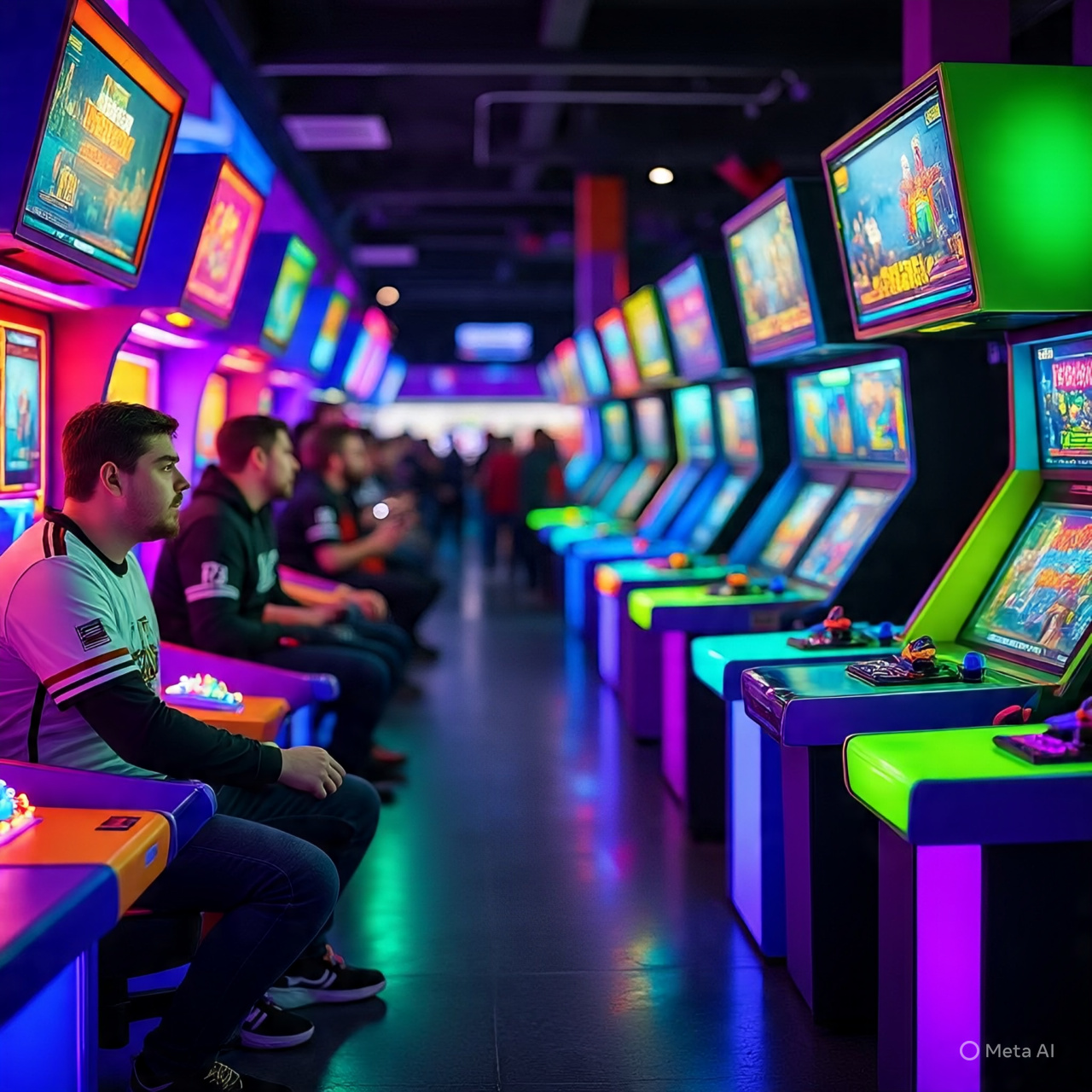
Defender is a golden age to many gamers. It was a period when arcades became social hot spots, with each quarter feeding into one of the machines an adventure. Playing Defender now is not only the game itself, but a re-experience of the time, the sound of arcade cabinets all around and the excitement of pursuing the top score.
It is not all about the past and Nostalgia helps keep Defender active in the retro gaming community. The game is frequently discovered by younger players with the help of compilations and emulators, who have the first time of encountering the game the heated atmosphere that crowned the arcade culture of the early 80s.
Lessons Modern Games Can Learn from Defender
Forty years later, Defender continues to teach the present game developers there are important things to learn. The balance between the challenge and the reward is one of the most crucial ones. Defender was ruthlessly challenging, and made the player have an indefiable achievement when he/she was able to survive one more wave. Modern games lack that balance sometimes, whether it be by making experiences too easy or by artificial difficulty.
One more is the lesson of simplicity. Defender did not require movie cutscenes, plots, and tutorials. It threw the players into the game, and allowed them to figure it out by experience. The philosophy of the design that has been deemed as easy to learn yet hard to master remains applicable today and is perceived in such indie hits as Celeste and Hades.
Lastly, Defender is the lesson of innovation. Its radar system, multi-button control, and rescue mechanics were innovative at the time that it was released. It risked it and those risks were rewarded. Existing in a gaming industry that occasionally runs on sequel-based and formulaic foundations, Defender stands as a token of the idea that something new and daring is often the thing that helps the medium to progress.
The Ongoing Retro Gaming Revival
We are experiencing a period when retro gaming is more than popular. Nostalgia-driven gaming is on the boom, whether it be restored arcade cabinets or mini-consoles loaded with nostalgia. Defender benefits enormously from this revival.
Original Defender arcade machines are valued by collectors and fully restored units may fetch thousands of dollars. The game is also kept available through emulators and digital re-releases, so that new generations of people can suffer its challenge without having to walk to a physical arcade.
Better still, the resurgence of the popularity behind esporting and high-score contest events has led to a revival in the popularity of games such as Defender. Retro tournaments draw not only old and experienced players but also interested newcomers who want to know whether they are worthy to play something so difficult on an arcade.
In a lot of aspects, Defender has transformed itself into a thing of the past yet something classic, something that stands the test of time- something that displays that great game design will always be great game design.
Conclusion
Defender is not a mere arcade classic–it is a landmark in the history of games. It established a precedent of what video games would be with its innovative mechanics and its mean streak of cruelty. It was not about glitzy graphics and simple wins; it was about knowing how to handle anarchy, defend humanity and exercise your prowess under a vast superiority.
Almost 40 years after its release, Defender still is a symbol of innovation, challenge and passion in the world of gaming. It spawned countless names, produced a generation of competitive gamers and is still a favorite in the hearts of retro-lovers.
Defender is an experience you must play whether you are a veteran that used to put quarters into the cabinet or a newcomer to the gaming world trying to find out about the history of this game. Not only history, but it is an exciting hair-raising ride even to this day.
FAQs
Can Defender be played nowadays?
Yes! Defender has been published in other retro-game collections, emulators, and in digital re- releases on the Xbox and PS. Some arcades and gaming bars have an original working cabinet as well.
What were the platforms of release on which Defender appeared?
Defender was adapted to many systems, such as the Atari 2600, Atari 5200, Commodore 64, ZX Spectrum, NES among others. Since that time it has appeared in several retro collections and contemporary digital media.
What is the difficulty of Defender in comparison to contemporary games?
Defender is said to be one of the most difficult arcade games of all time. In the case of modern games, it is possible to tune the gameplay difficulty, but Defender did not give any opportunity. It required quick respondences, multitasking and concentration without stopping.
Did Defender inspire other major franchises?
Absolutely. Your side- scrolling shooters, such as Gradius, R-type and Darius, influenced by defender. Its radar and rescue mechanics also gave birth to the features that are to be found in a million other genres.
In what places can I play Defender online?
Defender has been played using emulators, official retro collections, and even websites of arcades in a browser. For the most authentic experience, some retro arcades still house original cabinets.